
Not for an effortless life.
For a life worth the effort.
fresh from the workshop
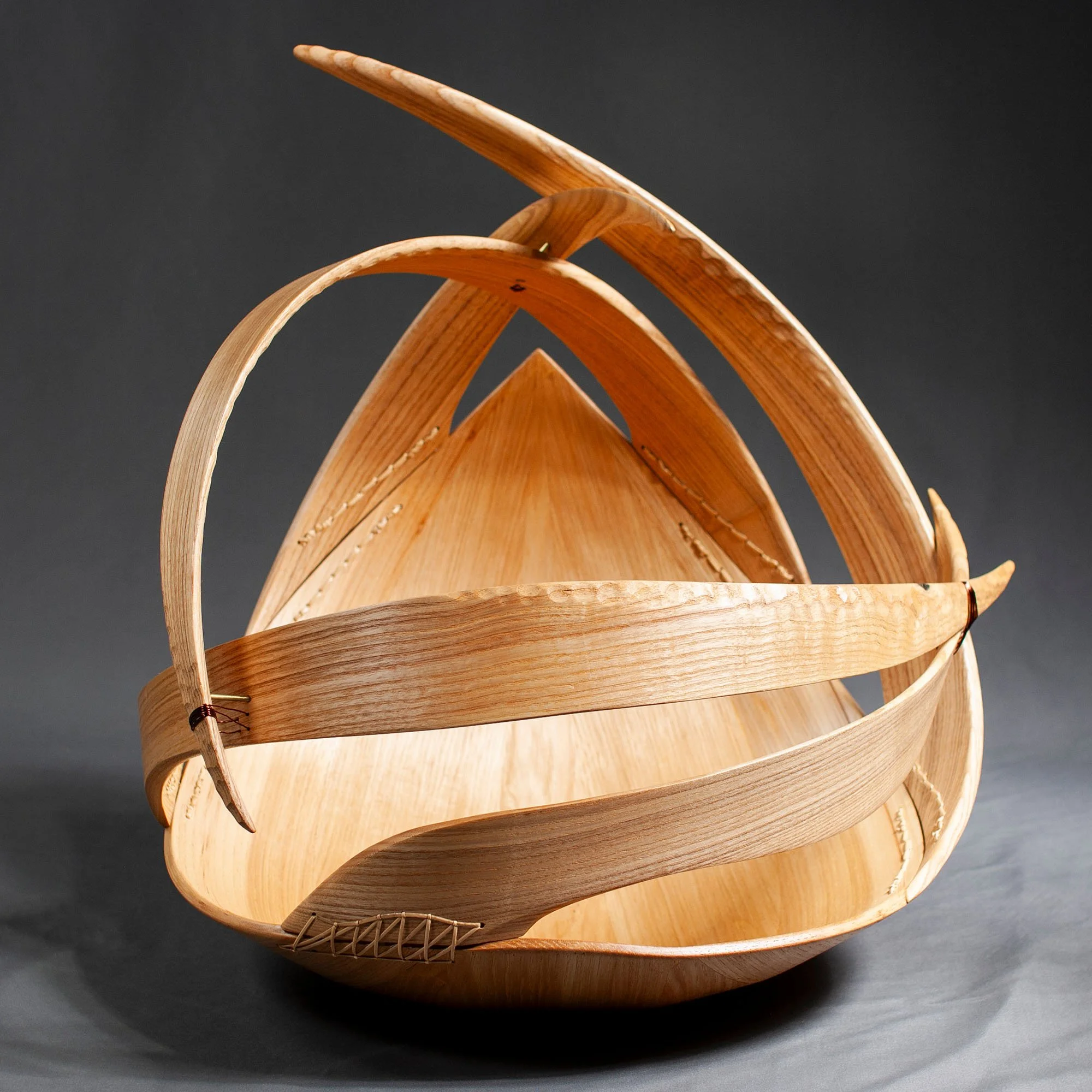
More than a basket. Hand crafted from steam-bent and laminated hardwoods, with multicultural influence in every stitch, this is a sculpture that stands for our universal collective needs as people living on this earth.
"Jíbaro" is a word that is quintessential to the Puerto Rican identity. We now use it to describe someone who lives in the countryside or cultivates the land, but it comes from a Taíno word that translates to "lover of the forest." I love that because it means this term is both distinctly of our land of Borikén, as well as universally human in meaning.
We are currently experiencing and witnessing a lot of pain in our world, and I find myself searching for reminders of what makes us human.
This is what I see in a basket—a tool so simple and universal to our collective needs as people living on this earth. To this end, I drew from various cultures for inspiration. My West African ancestors guided the overall shape with their bold and beautiful baskets, and lent me the triangular detail that serves as a starting point for much of the piece with their sense of geometric form. Incredible bamboo weavers in Japan inspired the feeling of water in the curved ash (a theme that flows through much of my work already), and pushed me to "think outside the basket." My Taíno ancestors' fantastic sense of motion, and lines that constantly and fluidly morph depending on the viewer's vantage point, fueled the ever-changing composition of those watery curves. And the Jíbaro's humble but emblematic straw hat, the pava, informed the spiraling ends that float out like blades of grass.
And so, yes, this is a basket. But it is also a celebration of humanity, a call to learn from and listen to one another both near and across the globe, and a reminder that every one of us is capable of adding beauty and purpose in this world, regardless of the violence around us.
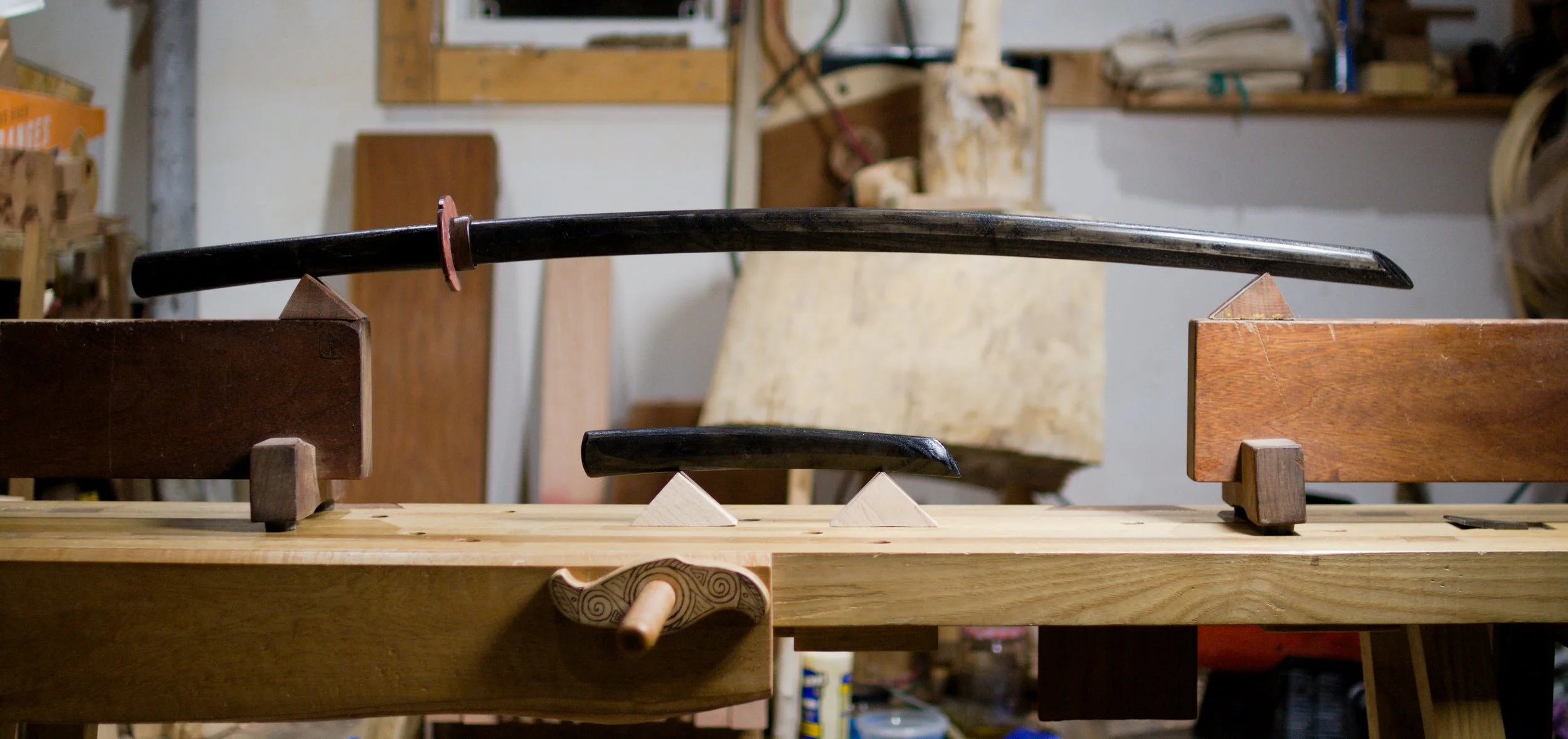
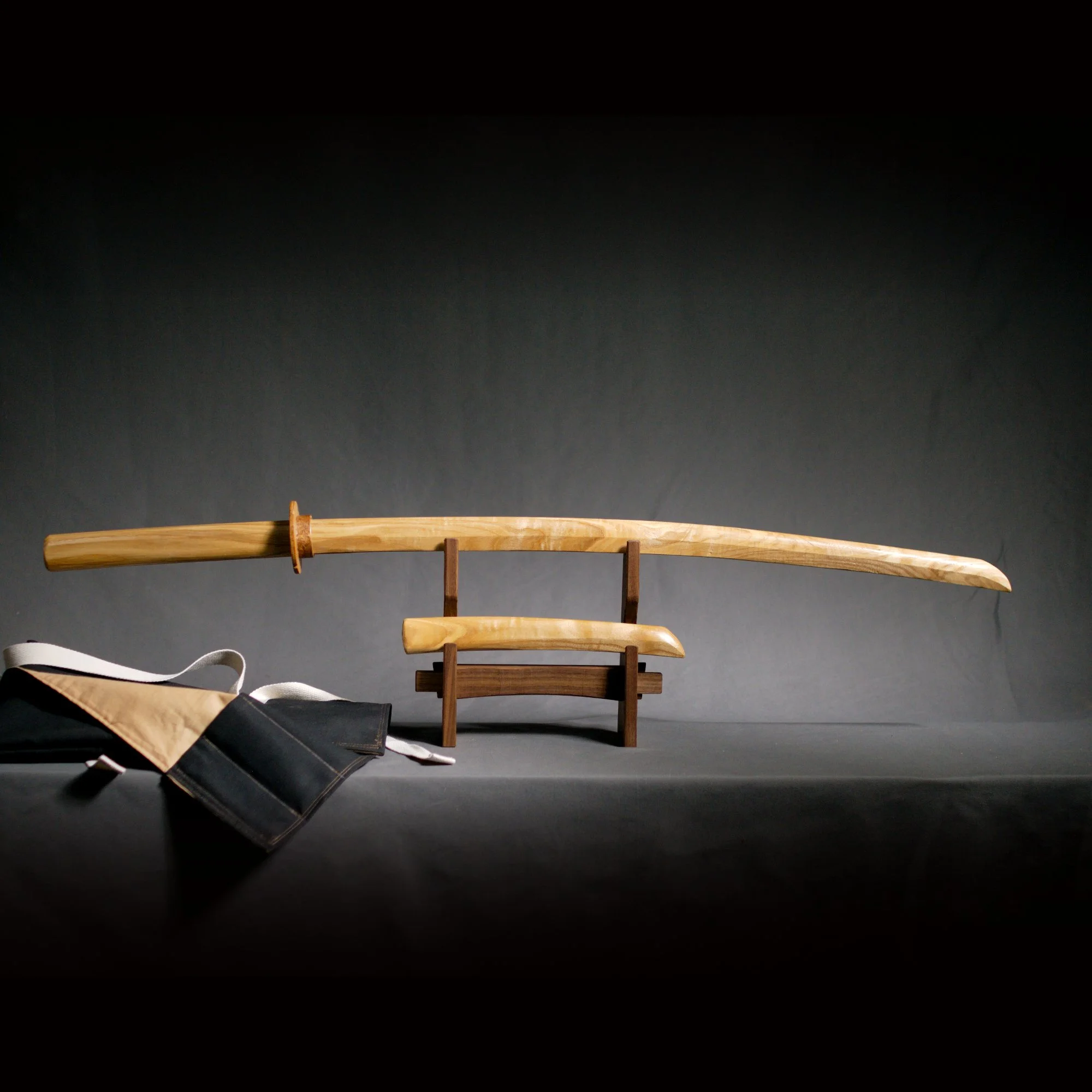
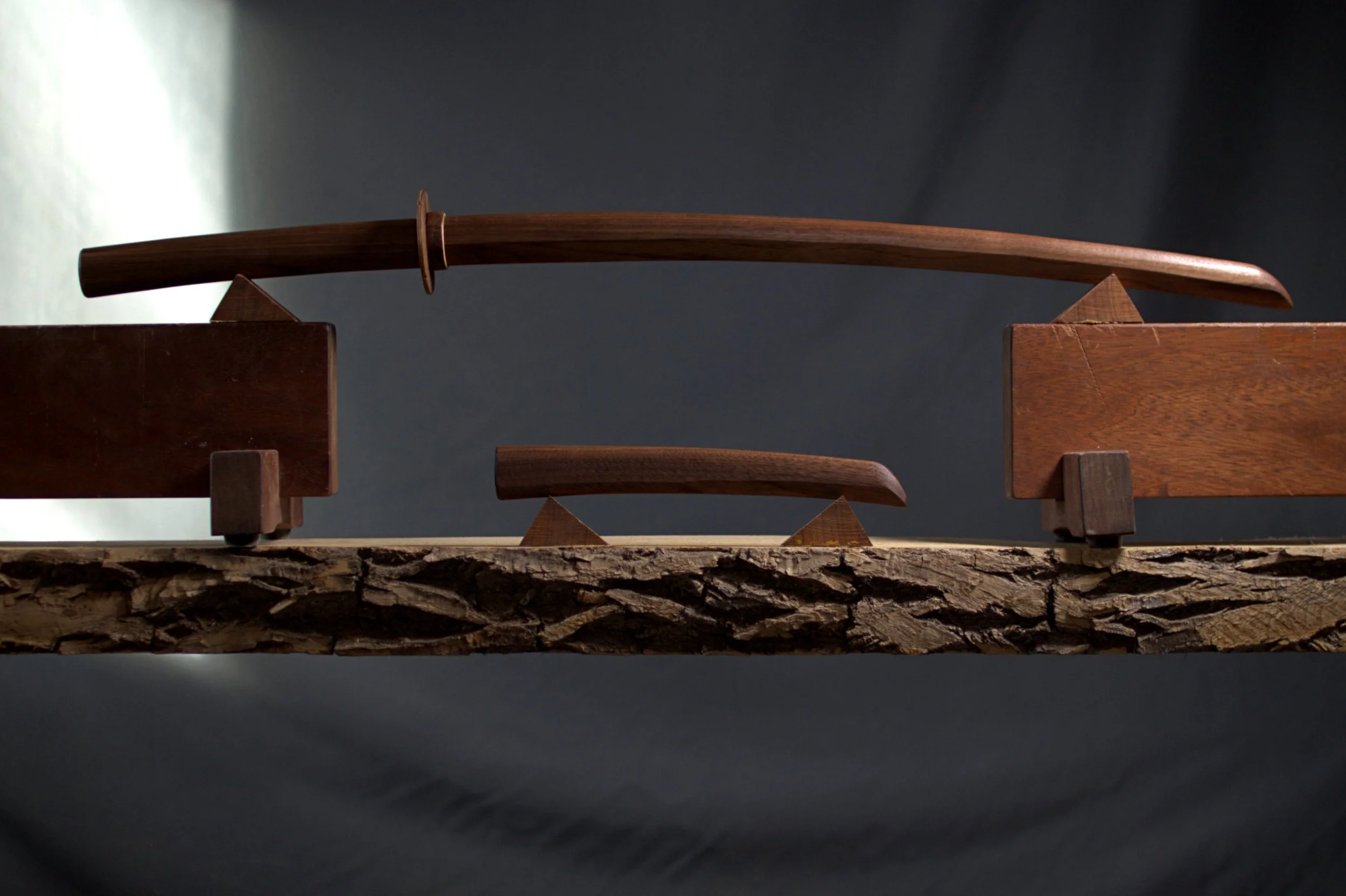
These two bokutō and tantō sets were hand carved from the same powerful piece of locally sourced White Ash. From the start, I knew they were going to want to have separate characters, and so, one set was made with the grain of the tree running in one direction, and the other was made in the opposite direction. This not only resulted in different looks, but in different hand feels as well, since the rather complex grain in this ash demanded to be carved differently depending on its direction. To further distinguish one from the other, one was left in natural tone, while the other was ebonized.
The natural tone set feels especially robust in the hand, while retaining proper balance. It features a tsuba made of cross-laminated African Mahogany and Hickory. The cross lamination allows the tsuba to be appropriately thin while also being remarkably strong. Please note the tsuba is made with a specialized process and is not removable. Should there be any issues with the tsuba during normal use, please contact me and I will fix it at no charge.
The ebonized set (sold before I could take a proper photo) has a lighter hand feel with a handle that’s a bit thinner toward the center. Its tsuba is made of Purple Heart and Wenge.
Bokutō are deceptively complex. A perfectly gradual taper is required from end to tip in order to have the right balance, as well as having a long and very subtle curve. My bokutō are based on a standard size and are 40” long, tapering from 1 1/16” thick at the hilt to 13/16” at the tip. The tantō are 11 5/8” long, tapering from 7/8” to 11/16”.
These swords were designed for use in activities such as kata practice and demonstration. However, the air-dried ash is sturdy enough for more robust work. That being said, please be aware that any activity involving strikes will result in dings, scrapes and possibly further damage, no matter how sturdily the sword is made.
A custom handmade tool wrap is included with this purchase (the display stand is not included). The wrap is made of durable duck canvas, with a botanically hand-died cotton lining.
My land is more than its many beaches, rich soil and mystical rainforests. More than its influence from Taíno, Spanish, and African cultures, for these have become something new. More than the continuous trauma of colonization, which pales in comparison to the fierceness of our joy. My land is also the warmth of my people. The sazón. The crushed garlic and the sofrito, the mofongo and the tostones, the flavors that carry into our voices and our music, heard and celebrated throughout the world, even by people who know nothing about us. So much from this little island of ours, Puerto Rico, Borikén, that can't be captured or portrayed.
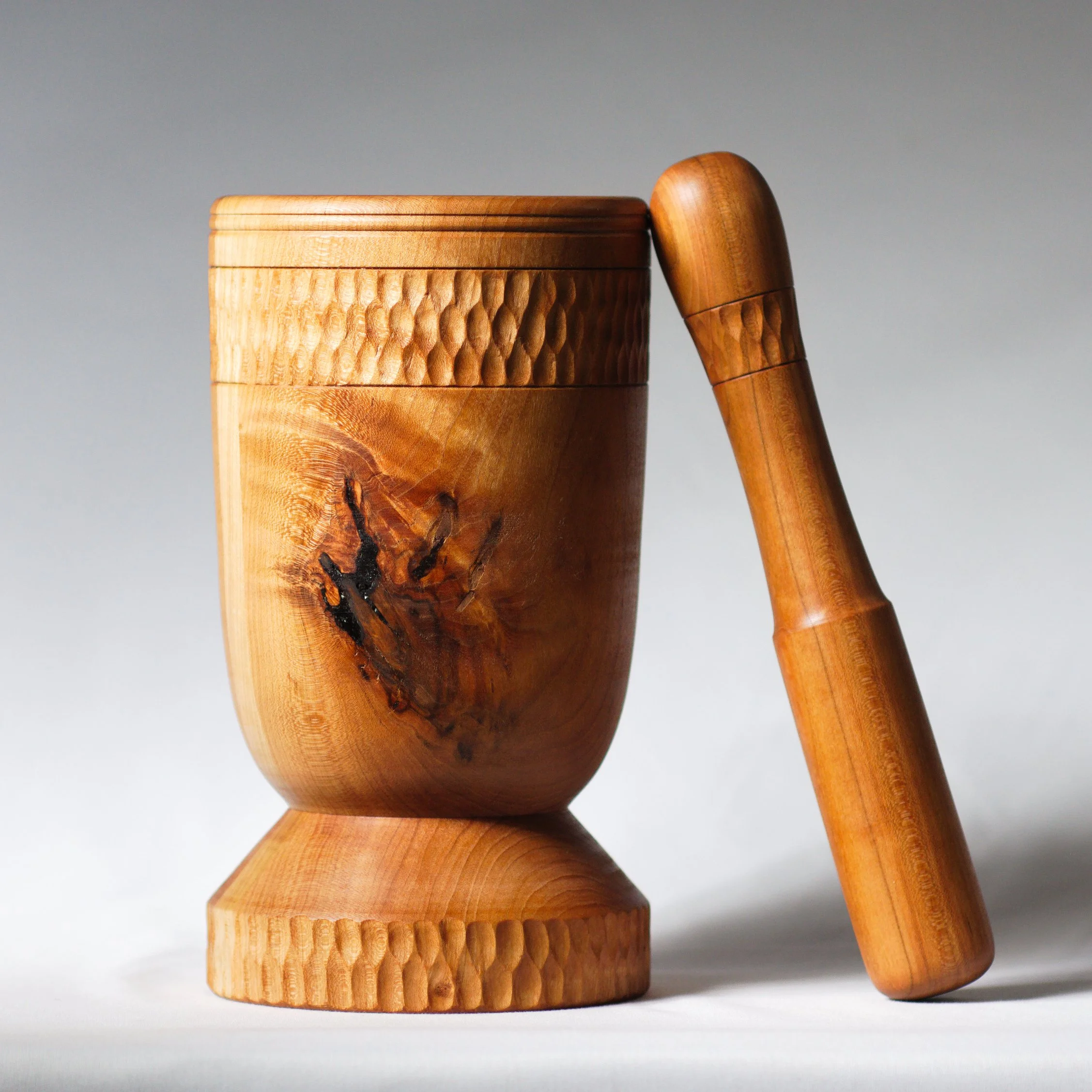
And so it brings me much honor to begin this collection of pilones (Puerto Rican style mortars). Because whether you're on the island, or missing it from far away as I am, there's something much deeper that connects us, a flame that can't be extinguished. Unfortunately most pilones we have access to are now mass produced offshore, and too often not great quality. I am proud to offer meticulously crafted pieces, and vow to make every one as unique as the person who chooses to cook with it.
This pilón was turned from cherry and hard maple. It features a striking cherry burl, and hand carved details in both the pilón and the maceta. It has been treated only with organic sunflower oil that has been heated for a stronger cure, to guarantee that it will not alter the flavor of your food or pose a threat to your health.
Specifications
Outer Dimensions: 5 1/4" W x 9 1/2" H
Hollow: 4 1/2" D x 4 1/4" W
Pestle: 10 1/4" L x 1 9/16" W
make it custom
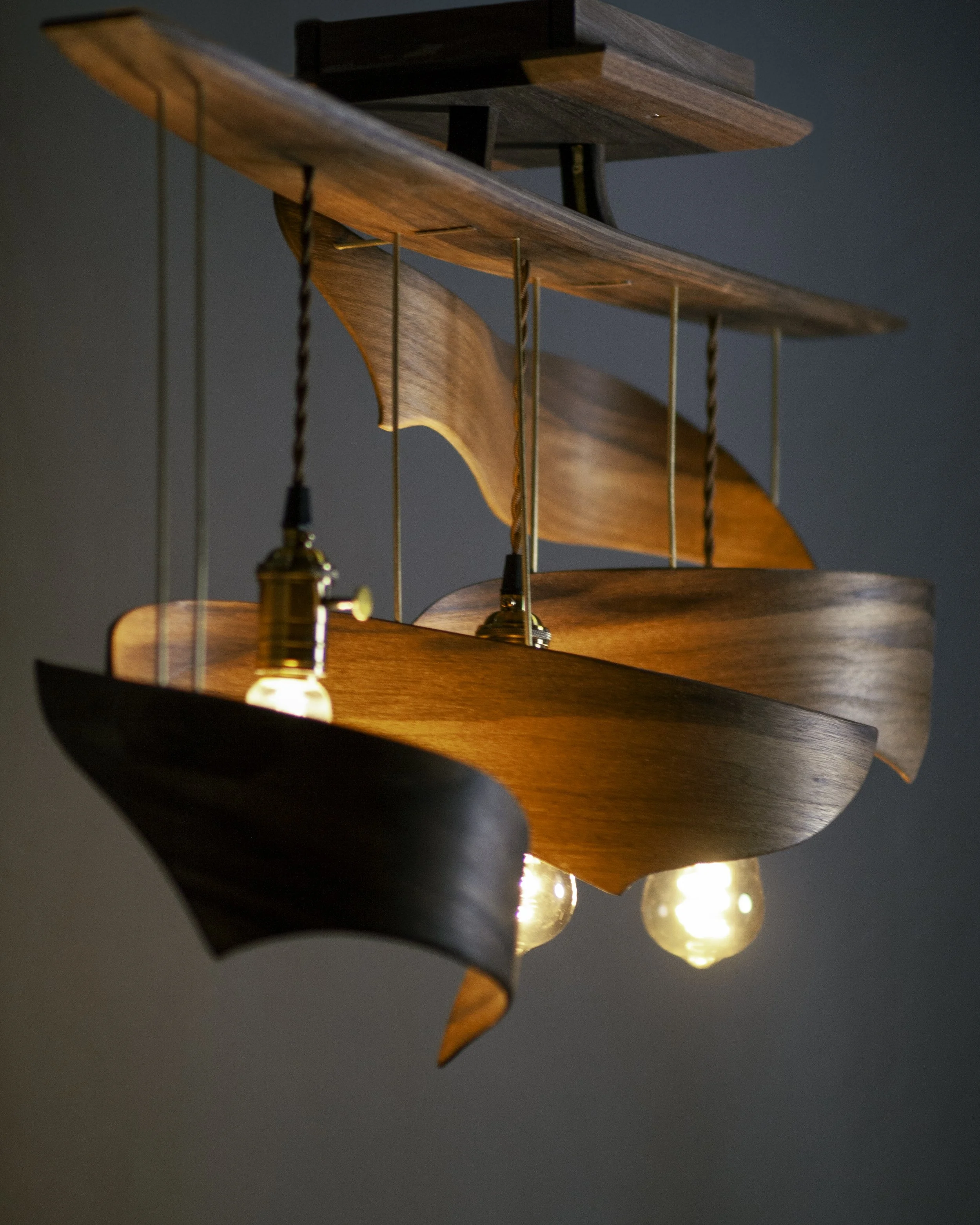
Everyone is unique, and so there is no true one-size-fits-all. Whether you’re dreaming of a sword that fits your body in practice, a chair that will help with your mobility needs, a bespoke table that inspires life in your home, or even a mortar and pestle that will properly honor your grandmother’s recipe, it is my honor to help you tell your story.
Take a look at my portfolio to get a taste of my style, and if it feels right, reach out about your custom build. We’ll get the conversation going to see if it’s a good fit—after all, a mortise-and-tenon is nothing without a good fit! Then, let’s make your dream a reality.
Not for an effortless life.
For a life worth the effort.
This is my central philosophy as a maker. The reason I make these objects, and put in the extra effort by working almost entirely with hand tools. This is not just a way of working. It’s promoting a healthier, more in tune and mobile way of life. My wish is to pull people back to real. To bring them back to their bodies while making room in their minds to slow down, disconnect from the noise and the artificial intelligence and the illusion of perfection. Remind them of the pleasure of touching something made by human hands, and of experiencing the difference in a craft that takes years to master. When they return to the room where my work lives, I hope it reminds them to breathe. To see the world around them with a little more clarity, and to understand themselves better. To feel gratitude in their bodies, and express this gratitude by using their bodies. Because when we are well and aligned in body and mind, we make better decisions, treat each other better, and can hope for a better world.